Osaka is Japan’s second largest metropolitan area after Tokyo. It has been the economic powerhouse of the Kansai region (Western Japan) for centuries. Osaka has a very deep and historic culture, but nowadays is known to be a more relaxing and casual destination. The local dialect, soul and street food, food culture, fashion is also very vibrant and will offer you a different insight into Japan. Osaka is the birth area of Japanese Comedy, and this humor can be seen in all the locals. They are friendly and will go out of their way to make you experience the real Osaka. Osaka is made up of 2 areas. The Osaka station area is called Umeda and the 2nd area slightly to the south is called Namba. Think of the Umeda area as the business hub of the city, and Namba as the playground of Osaka both during the day and night.
The best place to reminisce on Osaka’s past, would be the Osaka Castle area. Dated by to the 16th century you can feel the power of the Tokugawa Family just by looking at the amount of gold that is used in the Castle. Don’t forget gold doesn’t perish and that was said at the time for the Tokugawa Family too. It was this Tokugawa Family Shogunate that changed Japan in to a more civil and democratic Japan.
The Umeda (north) are of Osaka is a highly built-up area with uncountable high-rise buildings that hold thousands of food and shopping options. It is forever expanding and the newly opened Ume-kita Green Place area offers time to sit out in the park and watch people move about their daily lives. To get lost in the mass underground shopping area under Osaka Station and getting a panorama view from the Umeda Sky Building, which is an architectural wonder, are some of the major looks at the Umeda area.
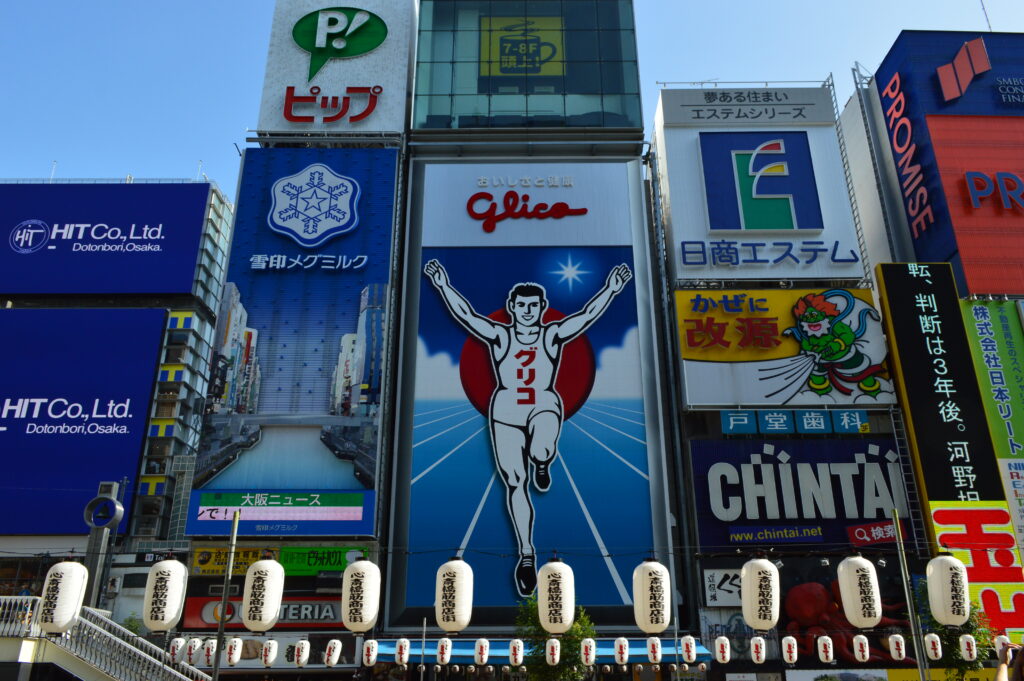
South Osaka (which is only 15 minutes from Osaka Station) is highly popular for its soul and street food. Anything from Okonomiyaki Pizza to Takoyaki (octopus in flour balls) in the Dotonbori Canal area, and Tuna sushi to Kushikatsu (skewered meat and vegetables) at the Kuromon Markets. The neon lights of Dotombori Bridge and Osaka’s Minami area are different from Tokyo, and entice a lot of people. However, during the day you can walk the Shinsaibashi shopping arcades and on to the Dotonbori canal area which is lined with food stalls and casual restaurants. Continue onto Nippon-bashi which is Osaka’s version of Akihabara with all the electronic stores and a very deep animation and sub culture scene. Continue on to the Shin-Sekai (translated to New World, but it is actually an Old retro World) area which is a very deep part of Osaka and has not really changed since the end of Word War 2. If you are after a chance to mingle with the locals, this is a great location and while the iconic Tsutenkaku Tower looks over you, you may like to have a “don’t dip twice” Kushikatsu (skewered meat and vegetables) lunch with an alcoholic beverage at a very minimal price.
If you want to see the roots of Osaka, a visit to Shitennoji Temple may be of interest. One of the oldest temples in Japan and the most important Buddhist structure in Osaka, the Shitennoji Temple is a good place to get a glimpse into the country’s religion. This temple was originally built in the 6th century by Prince Shotoku as a way to help promote the introduction of Buddhism to Japan. Anything from Universal Studios Japan, Art Galleries, Bunraku Puppet theaters, canal cruises to the Kaiyukan Aquarium will keep anyone busy.
Highlights: Osaka Castle • Dotonbori Canal area • Shinsaibashi Shopping arcade • Shin-Sekai new world • Tsutenkaku Tower • Kuromon Markets • Nipponbashi Electrical town • Umeda Sky Building • Osaka Station underground shopping area • Universal Studios Japan • Kaiyukan Aquarium • Midosuji Street Brand Shopping • Shitennoiji Temple
Recommended length of stay: 2-3 Nights